Commercial Epoxy Flooring Boise: Floors Built to Take Forklifts, Spills, and Daily Abuse
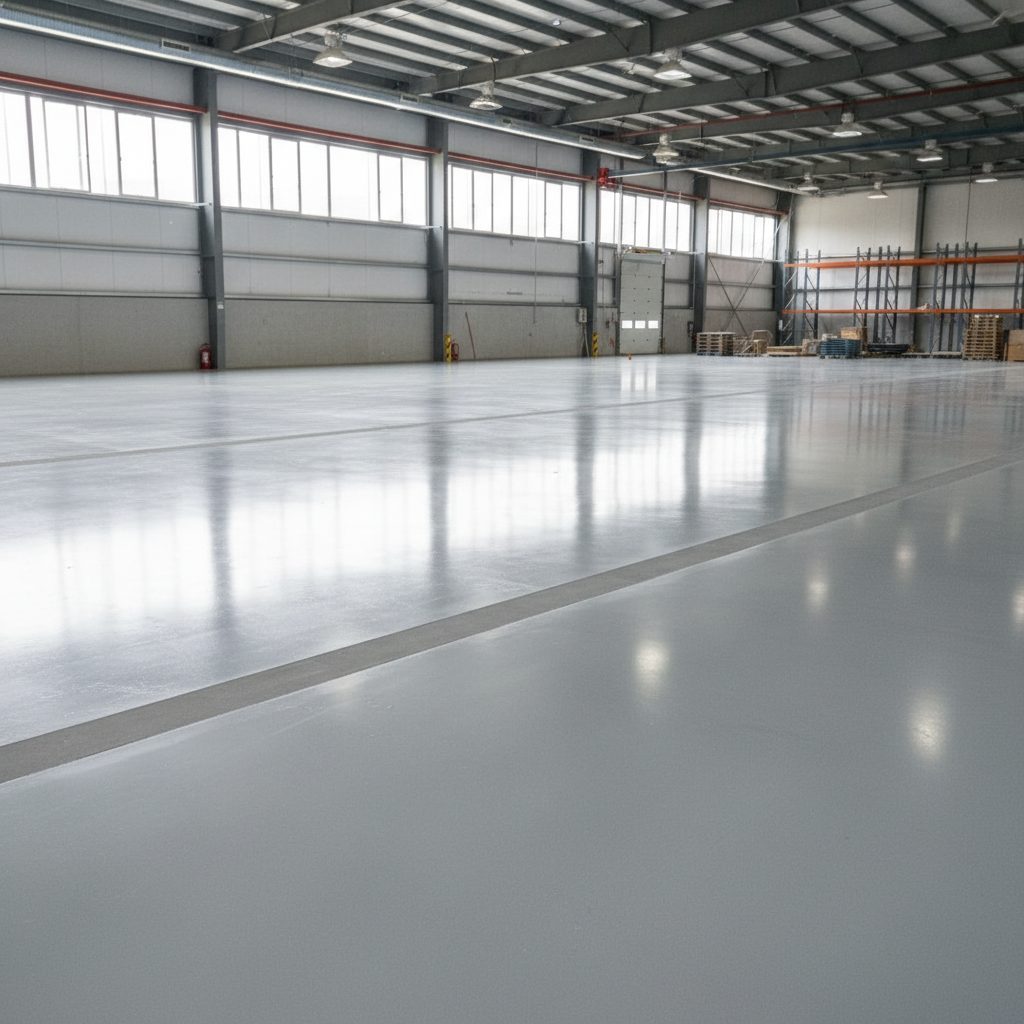
Durable, low-downtime epoxy floors for Boise businesses, installed on your schedule.
Your floor is the one surface in the building that touches every shift, every forklift, and every spill. The installers coat Boise warehouses, shops, restaurants, and clinics with systems specced to that abuse, and the provider schedules the work so your operation barely notices the crew.
Why Boise Businesses Choose Epoxy Flooring
If you manage a commercial facility in Boise, your floors take constant, heavy abuse. Forklifts, heavy foot traffic, chemical spills, dropped tools, and constant cleaning cycles break down standard flooring fast. Concrete alone is porous, dusty, and difficult to maintain. Tile grout turns into a bacteria trap in food service environments. Vinyl and carpet wear out in months under real commercial loads.
A proper commercial epoxy system is a different animal. It is ground into the slab, not rolled over it, so what you get is a smooth, nonporous wear surface that shrugs off abrasion, chemicals, impacts, and moisture instead of peeling under them. Done right, it pays for itself in fewer shutdowns, cheaper cleaning, and inspections that stop being stressful.
Boise's commercial base has grown fast, and Central District Health inspectors and Boise City fire marshals expect food-service and clinical floors to hold up to that scrutiny. Industrial-grade materials are used on every job, and product spec sheets can be provided when an inspector wants documentation. Straight answers, from the first call to the finished floor.
The installers install commercial epoxy floors across:
- Boise and the downtown business corridor
- Meridian, Nampa, and Caldwell
- Eagle, Kuna, and the broader Treasure Valley
If your facility sits within roughly 40 miles of downtown Boise, one call gets you a free estimate over the phone and the crew on the calendar.
Commercial Spaces Served
Warehouses and distribution centers along the Gowen Road and airport corridor, and out the I-84 line through Meridian and Nampa, need floors that handle forklifts, pallet jacks, and constant foot traffic. The installers install multi-layer industrial-grade systems with the mil thickness to absorb that daily impact, and safety striping and traffic lanes can be built directly into the floor during installation.
Auto shops and dealerships are one of the most common commercial applications the provider handles in Boise. Epoxy resists motor oil, transmission fluid, brake fluid, and solvents that destroy standard concrete over time. The nonporous surface makes cleanup fast. A mop or floor squeegee removes most spills without scrubbing.
Restaurants and commercial kitchens have strict health department requirements. The installers install seamless, nonporous epoxy systems suited to food-service environments, with no grout lines or seams where grease and bacteria accumulate. These systems hold up to the acidic cleaners, degreasers, and standing water that kitchen floors endure daily, and the provider can provide product spec sheets if your inspector needs documentation.
Retail spaces live and die on first impressions, and the floor is a bigger part of that than most owners give it credit for. The installers install decorative flake, metallic, and solid-color finishes that read clean under retail lighting and match your brand instead of fighting it.
Medical and dental offices require surfaces that can be disinfected repeatedly without degrading. Seamless epoxy eliminates the joint gaps that collect debris and harbor contaminants. The provider’s systems hold up to hospital-grade cleaners and bleach solutions used in clinical environments.
Gyms and fitness facilities need floors that handle dropped weights, rubber equipment mats, and heavy foot traffic while staying attractive for members. The installers install systems specifically formulated for fitness environments, with texture options that provide grip underfoot.
Which Epoxy System Is Right for Your Facility?
Not every commercial floor needs the same system. On the call the provider recommends the right one for your traffic, environment, and budget, and the crew confirms it on-site before work starts. Here is how the common systems compare.
| System | Best for | Key trait |
|---|---|---|
| Single-coat epoxy | Clean, level slabs. Lighter-duty back-of-house areas | Lowest cost, fastest install |
| Multi-layer / high-build | Warehouses, auto shops, manufacturing | Built up to absorb forklift and impact loads |
| Broadcast aggregate | Wet, oily, or high-traction zones | Slip-resistant texture sealed into the surface |
| Self-leveling | Showrooms, retail, medical, reception areas | Smooth, flat finish where looks matter |
Commercial Epoxy Flooring Pricing in Boise
Every commercial floor is different, so the provider puts the estimate after a free estimate call, before any work begins. Commercial epoxy flooring in Boise depends on floor condition, system type (single coat, multi-layer, broadcast), and the scope of prep work required. Most standard warehouse and shop floors the provider installs fall in the mid-range. A basic single-coat system for a clean, level concrete floor is more economical. A full industrial multi-layer system with broadcast aggregate, a topcoat, and floor marking requires a larger investment. Facilities with cracked or heavily contaminated concrete require more prep work, which affects the final number.
The installers provide estimates on every project so you know exactly what you are paying for. Only client-approved scope changes affect the final price.
Got a floor that needs a real estimate?
Call (208) 285-7685 and describe your slab. You get a straight answer on what it takes, no form, no waiting.
Call (208) 285-7685Free estimate over the phone, no phone treeWork Around Your Schedule
The provider’s goal is simple: get your new floor installed without blowing up your operations schedule. Shutting down a commercial operation for floor work is expensive. The provider understands that and the provider plans accordingly. For facilities that cannot afford daytime downtime, ask us about nights, weekends, or phased sections. The provider coordinates access, ventilation, and cure windows around your operational needs from the start of the planning process, and the provider builds in the time the floor needs to reach full cure before it goes back into service.
What to Expect From Start to Finish
Every commercial job follows the same clear path, so you always know what comes next:
- Free estimate over the phone. Describe the square footage, the traffic, and the slab condition and you get a straight number on the call; the crew confirms it on-site before any work starts.
- Estimate. Once the crew has seen the space, you get an estimate and a recommended system, no obligation.
- Scheduling around your operation. The provider locks in dates that minimize downtime, including nights and weekends when needed.
- Surface preparation. The installers diamond-grind the concrete, repair cracks, and create the profile the coating needs to key into the slab.
- System installation. The installers apply the coats, broadcast aggregate, add any safety striping, and seal it under a clear topcoat.
- Cure and return to service. Pedestrian traffic typically returns once the topcoat cures; vehicle traffic once the system reaches full cure.
Safety Features Built Into the Floor
Commercial epoxy is not just about appearance or durability. Safety is a core function of the systems the provider installs. Slip-resistant aggregate can be broadcast into the topcoat to provide traction in wet or oily environments. Floor demarcation striping, yellow lines for pedestrian zones, red for hazard areas, blue for equipment parking, is painted directly onto the epoxy surface and then sealed under a clear topcoat so the markings stay put and won't peel or wear off under traffic. Striping can follow OSHA color conventions for emergency exits and machinery zones.
Why a Local Provider Matters
Ask any flooring company who will actually install your floor and who you call afterward. With a local provider, you talk to the provider before any work is booked, and you have a direct phone number rather than a corporate hand-off.
The installers coat commercial floors throughout the valley, from the warehouses and shop buildings along Gowen Road and the airport corridor in Southeast Boise, to auto shops on Fairview and State Street, to retail and clinical space in Downtown, BoDo, and the medical cluster off Emerald and Curtis. If your facility is anywhere in the Treasure Valley, one call gets the crew out to walk it and an estimate in your hands.
Ready to Get Started?
Call us directly. The crew will come to your Boise-area facility, assess your floor condition, measure the space, and recommend the right system for your traffic and budget. Then the crew gives you an estimate once they have seen the space, no obligation, no sales pressure.
Request a Commercial Epoxy Flooring Estimate in Boise
Get your free, no-obligation estimate
Call (208) 285-7685 and describe your floor. You get a straight answer on what it takes, no form, no waiting.
Call (208) 285-7685Free estimate over the phone, no phone tree See your price30-second calculator on the home pageNo obligation.
Commercial Epoxy Flooring FAQ
1. How much does commercial epoxy flooring cost in Boise?
Commercial epoxy flooring in Boise depends on system type, floor condition, and preparation requirements. A basic single-coat system for a clean concrete slab is more economical, while a full industrial multi-layer system with broadcast aggregate, safety striping, and a clear topcoat requires a larger investment. The installers provide estimates on every project so you know exactly what to expect before the provider starts.
2. How long does commercial epoxy flooring installation take?
Commercial epoxy installation depends on square footage, system complexity, and floor prep requirements. A single-coat system on a clean slab completes faster than a multi-layer industrial system with broadcast flake and a topcoat. The provider gives you a firm timeline before work begins so you can plan facility operations around it. The provider’s goal is to get your floor finished and back in service without compromising quality, so you minimize lost production or sales.
3. Can you work around my business hours to minimize downtime?
Yes. The provider regularly schedules commercial installations during nights and weekends to avoid disrupting daytime operations. Many of the provider’s warehouse and retail clients have the provider grind and coat overnight so the floor is ready for the morning shift. The provider coordinates staging, ventilation, and cure windows around your operational schedule from the beginning of the planning process.
4. What types of commercial floors is epoxy good for?
Epoxy performs well in almost any commercial setting with a concrete substrate, including warehouses, auto shops, restaurants, retail stores, medical offices, gyms, and manufacturing facilities. The key requirement is a sound concrete slab. The crew assesses floor condition on-site before work starts and confirms the right system for your specific environment. Epoxy is not the right fit for floors with severe structural cracking or significant moisture vapor emission without additional mitigation.
5. Is epoxy flooring safe for food service and restaurant kitchens?
Yes. The installers install seamless, nonporous epoxy systems suited to commercial kitchens and food service environments. These eliminate the grout lines and seams where bacteria and mold grow, and hold up to the acidic cleaners, degreasers, and hot water used in daily kitchen cleaning without breaking down. The provider can provide product spec sheets if your health inspector needs documentation on the system.
6. How do employees walk on epoxy floors safely?
Slip resistance is built into the floor during installation by broadcasting fine aggregate, silica sand or aluminum oxide, into the topcoat before it cures. This creates a textured surface that provides traction in wet or oily conditions. For areas with frequent liquid exposure, the provider increases the aggregate broadcast rate to improve grip, so the wash bay gets more texture than the front office.
7. How long does commercial epoxy last with heavy forklift traffic?
A properly installed industrial-grade epoxy system in a high-traffic warehouse with regular forklift use typically holds up for many years before requiring a full reseal or recoat. The exact lifespan depends on system thickness, equipment type, and how consistently the floor is maintained. Minor wear areas can often be spot-repaired without replacing the entire floor, which extends the overall service life considerably.
8. What is the difference between standard epoxy and industrial-grade epoxy?
Standard epoxy coatings, like those sold at big-box stores, are typically thin single-coat systems measured in a few mils of thickness. Industrial-grade systems are multi-component formulations applied at significantly greater thickness, often 20 to 40 mils or more, with higher solids content and greater chemical and abrasion resistance. Industrial systems also require professional surface preparation equipment to grind a mechanical key into the slab for heavy commercial use. The installers use commercial-grade materials on every job, not consumer products.
9. Can you add floor markings and safety striping to epoxy floors?
Yes, and this is one of the most practical features of commercial epoxy. The installers paint demarcation lines, pedestrian walkways, hazard zones, forklift lanes, and equipment boundaries directly onto the epoxy surface during installation, following OSHA color conventions where applicable, then seal them under a clear topcoat. That seals the markings in so they stay put and won't peel or wear off under traffic the way surface-applied paint does.
10. How do I maintain a commercial epoxy floor?
Daily maintenance is straightforward. Sweep or dust mop to remove grit, then damp mop with a neutral pH cleaner as needed. Avoid acidic or abrasive cleaners, which can dull the finish over time. For high-traffic facilities, a quarterly scrub with a floor machine and neutral cleaner keeps the surface looking clean and extends the coating life. Promptly clean chemical spills, especially solvents, to prevent prolonged surface contact.
11. Do I need to shut down operations during installation?
The installation area needs to be clear of equipment, inventory, and personnel during surface preparation and coating application. However, you do not necessarily need to shut down your entire facility. The crew can work in phases or sections to keep part of your operation running. After the topcoat is applied, pedestrian traffic can typically return once the topcoat cures, and vehicle traffic once the system reaches full cure, depending on system type and curing conditions.
12. Can epoxy be installed over existing tile or concrete in my facility?
Epoxy can be installed directly over bare concrete in almost all cases. Installing over existing tile is possible but requires a careful assessment. Loose, hollow, or cracked tiles must be removed first, and the adhesive residue must be ground down to create a sound, level substrate. You get a free estimate over the phone from what you describe, and the crew evaluates the existing floor on-site and confirms what prep is required before any work starts.
13. Is epoxy flooring suited to restaurant and commercial kitchen environments?
When the correct system is specified, seamless nonporous epoxy is well-suited to food service environments. It eliminates grout joints and floor-wall seams where grease and bacteria accumulate, and resists the cleaners required in commercial kitchen settings. If you are undergoing a health inspection or a kitchen renovation, the provider can provide product documentation and spec sheets for the system the provider installs so your inspector has what they need.
14. What is a self-leveling epoxy and when do you recommend it?
Self-leveling epoxy is a lower-viscosity formulation that flows out and levels itself to a smooth, flat surface during installation. The provider typically recommends it for commercial spaces where aesthetics are a priority, like showrooms, retail floors, medical offices, and reception areas where a perfectly smooth finish is desired. For high-traction industrial environments, a broadcast aggregate system is usually a better choice because the aggregate provides grip that a smooth self-leveling system does not.
15. How do I get a commercial epoxy flooring estimate from Boise Epoxy Pros?
Call us directly at (208) 285-7685. The provider will give you a free estimate over the phone, talk through the floor condition and your operational requirements and timeline, and give you an estimate once the crew has seen the space. There is no obligation to proceed and no pressure during the estimate process.
16. Will epoxy installation create strong odors or affect indoor air quality?
During installation and initial curing, epoxy materials do have an odor, and some commercial systems are lower in odor and VOCs than others. The provider manages this by planning ventilation, working in phases, and scheduling work during off-hours when needed, often nights or weekends when your building is empty. Before work starts the crew goes over ventilation, odor control, and whether any sensitive areas should be temporarily closed off. Once the floor has fully cured, the coating is inert and does not give off ongoing fumes.
More Epoxy Services
Garage Floor Epoxy
Turn your garage floor into a clean, durable surface that handles cars, tools, and Idaho winters. Professional installation with your choice of finish.
Garage floor epoxy in BoiseBasement Epoxy Flooring
Put a bright, moisture-resistant floor under an unfinished basement and it starts earning its keep as real square footage.
Basement epoxy flooring in BoiseEpoxy Flooring in Meridian
Serving Meridian's growing commercial corridors and residential neighborhoods with the same industrial-grade systems the provider installs in Boise.
Epoxy flooring in MeridianEpoxy Flooring in Nampa
From Nampa warehouses to garage floors, the provider brings the same crew and materials that serve the broader Treasure Valley to your project.
Epoxy flooring in Nampa